
Scam Recovery & Victim Support
Carnegie Mellon Research Shows Scam Victims Need More Than Instructions
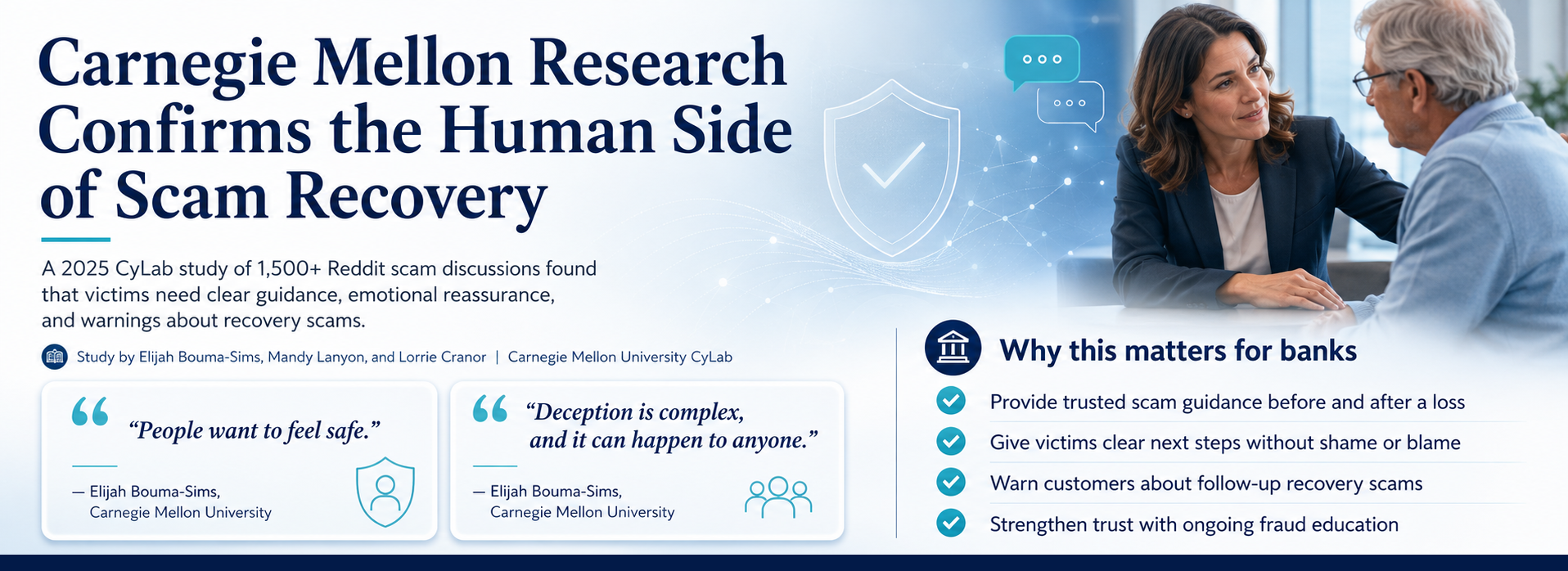
Recent research from Carnegie Mellon University’s CyLab highlights an important point for banks and credit unions: scam victims need clear next steps, but they also need reassurance, support, and trusted guidance without shame or blame.
The study analyzed more than 1,500 scam-related Reddit posts where people asked questions such as “Is this a scam?” or “What should I do now?” Researchers found that many victims turn to online communities because they are scared, embarrassed, confused, or unsure who to trust.
Key Finding
Scam recovery is not just procedural. Victims often need practical advice, emotional reassurance, and help understanding what to do next.
Why This Matters
Traditional fraud guidance often focuses on steps such as changing passwords, canceling cards, freezing credit, or filing reports. Those steps are important, but they may not be enough for someone who is panicked, embarrassed, or still being manipulated by a scammer.
A victim who feels judged may delay asking for help. That delay can give scammers more time to steal money, access accounts, or pressure the victim into additional payments.
“People want to feel safe.”
— Elijah Bouma-Sims, Carnegie Mellon University
Recovery Scams Are a Major Risk
The research also points to a serious follow-up threat: recovery scams. These happen when criminals contact victims and claim they can recover stolen money, cryptocurrency, accounts, or personal information.
Anyone who asks for upfront fees, remote access, cryptocurrency, login information, or secrecy should be treated as a major red flag.
Important Warning
Scam victims may be targeted a second time by fake recovery agents, hackers, investigators, or companies claiming they can get stolen money back.
What Banks and Credit Unions Should Provide
Financial institutions should make trusted scam guidance easy to find before customers turn to random forums, search results, social media comments, or fake recovery services.
- Clear steps for what to do after a scam
- Guidance on when and how to contact the financial institution
- Warnings about recovery scams
- Identity theft and account protection steps
- Reassuring language that avoids blame or shame
- Frontline support resources for helping distressed customers
How eFraud Prevention Helps
eFraud Prevention gives banks and credit unions a ready-to-use support resource that helps customers understand scams, report fraud, take recovery steps, and avoid being targeted again.
Instead of leaving victims to search the internet during a stressful moment, financial institutions can provide a trusted place for clear fraud guidance, scam recovery help, and victim support.
Bottom Line
Scam victims need more than warnings. They need a trusted place to turn, clear next steps, recovery scam warnings, and support that helps them act quickly without feeling ashamed.
Source: Carnegie Mellon University CyLab research on scam victims and online communities.
Want a compliant, low-friction way to describe what eFraud Prevention is (and isn’t) for your internal teams?
Request Access
eFraud Prevention Assistant
You asked: